
Can Europe build its own tech stack?
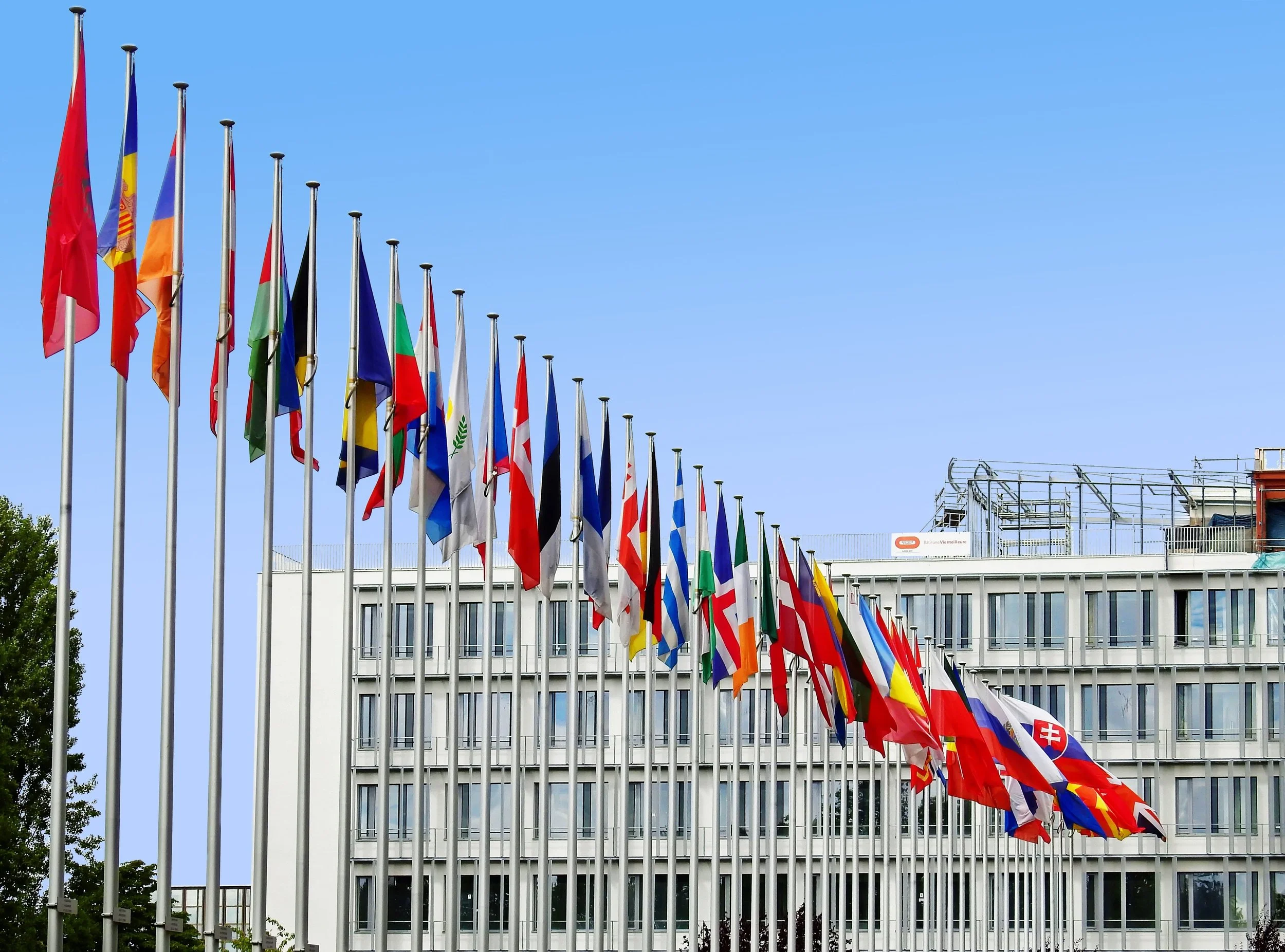
Flags of multiple countries
In one summer, Europe watched a single order in Washington cut off access to frontier AI overnight, then watched a Paris start-up raise what it called the largest equity round in European tech history. Between them, the two events pose the question that ran through VivaTech in June: can Europe achieve technological sovereignty, or will it keep deepening its dependence on American and Chinese technology?
Sovereignty was the word of the show, appearing in the titles of 175 sessions. What happened on either side gave the word meaning, and the two events ran in opposite directions.
The first was a shock. In June, Anthropic suspended its two newest models, Fable 5 and Mythos 5, for all customers after US authorities raised security concerns. The order, an export-control directive, covered any foreign national anywhere, so Anthropic said it had to disable the models for everyone to comply. Washington lifted the restrictions on the 30th of June and access returned on the 1st of July, though the US government had already approved restoring Mythos 5 to some US organisations on the 26th June. The blackout affected enterprise workflows built around the models. For many in Europe, the blunt lesson was that a tool that businesses now depend on could be switched off, then back on, by a single decision taken abroad.
The second went the other way. On the 8th of September, Paris-based Mistral closed a €3 billion Series D at a valuation above €21 billion, which Mistral called the largest equity round ever completed by a European technology company. Mistral sells itself as a sovereign alternative to American giants such as OpenAI and Anthropic. The round also brought in the EU-backed Scaleup Europe Fund, Brussels' public-private vehicle targeting €5 billion, as a co-lead. It looked like European money moving at the scale the sovereignty case has always demanded.
The sovereignty conversation usually starts with artificial intelligence, because the leading model developers are American, OpenAI, Anthropic and Google among them. The reliance goes well beyond models, though, into the infrastructure and the capital Europe needs to build and scale whatever it invents next. Macron has supported investments heavily to push in the other direction, drawing €93 billion in foreign pledges at this year’s Choose France Summit. At VivaTech, France and Germany agreed on a joint paper that gave the two countries a shared definition of digital sovereignty, the kind of coordination that has too often been absent.
The infrastructure gap
Cloud infrastructure shows the size of the problem. Competing at scale needs one integrated market, and Europe's is still carved up by national regulators, languages and procurement rules. That splintering makes coordination slower and more expensive than it is for rivals operating within a single large home market. Amazon Web Services, Microsoft Azure and Google Cloud together hold more than 60% of the global cloud infrastructure market, with China's Alibaba Cloud the biggest name behind them. Most of the next tier, Oracle and the fast-growing neoclouds among them, are American too. European providers are left with far less. SAP and Deutsche Telekom, two of the region's largest, each hold around 2% of the European market.
The question for Europe is whether it can build enough of its own infrastructure, and quickly enough, to compete with providers that already have the scale and the customer base to work across markets. The worry goes past market share. Organisations that run on foreign technology are exposed to the laws and the politics of the countries where that technology is based. When the US banned Kaspersky software in 2024, citing the Russian government’s potential influence over the company, that exposure stopped being theoretical. The Anthropic shutdown proved it again.
Capital follows scale
Money is the second pressure, and the gap is easy to underrate.
European venture funding rose to €66.2 billion in 2025, its first increase in three years, yet that was still only about a fifth of what went into US startups. The pace picked up in 2026. Europe raised about €44 billion in the first half, on track for a 27% rise on 2025, and AI now accounts for more than 60% of European venture deal value, up from 37.9% across 2025.
The gap with the US widens at the later growth stages, where the sums get bigger and the pull to raise in New York, or list there, is hardest to resist.
That pull can send European firms abroad for capital, through a sale or a foreign listing. The cost is slow to show and hard to reverse. Europe loses the companies, and with them the talent and the products those companies would have built at home. Rolling job cuts have added to the worry about how far a US downturn, or a change in American investment plans, could hit jobs in Europe.
Mistral's raise is the clearest test yet of whether that pattern can break. It also shows the contradiction built into European sovereignty. European and public money now stand behind a homegrown champion at real scale, and yet Samsung led the round, the American backers include Nvidia and Andreessen Horowitz, and Mistral’s compute runs on Nvidia chips. Nvidia supplies the GPUs in 45% of the sovereign AI infrastructure projects tracked by the Center for a New American Security’s Sovereign AI Index. Its ambition is European. Its silicon is American.
Infrastructure and capital are two sides of one problem. Without the scale to draw investment, European companies struggle to build infrastructure that can compete. Without that infrastructure, they stay tied to foreign providers, and are readier to look abroad as they grow, which deepens the reliance on foreign money and technology all over again.
Europe's goal is not complicated to state: more control over its own technological future. Closer alignment with the UK helps, and the competition cooperation agreement the two signed in February leaves room for more. Chasing full independence across every layer of the stack would be costly, and probably beside the point. The workable aim is narrower. Strengthen the areas where Europe already has an edge, in regulated industries, deeptech, quantum and green technology, and build enough capability in the technologies that matter most to limit its exposure to choices made elsewhere.
None of this is settled. Mistral has the money now, and money is the easy part. The harder task is turning a sovereignty pitch into products that enterprises keep buying once the politics cool, all while renting compute from the same American suppliers Europe says it wants to lean on less. Governments will fund resilience because resilience is the point.
Enterprises need something that works and keeps working, at a price that makes sense. That is where the sovereignty question gets answered, in renewal contracts and procurement shortlists, not on conference stages. June was loud.
What follows will be quieter, and it will count for more.