
What Investors Are Really Looking For in the Age of AI
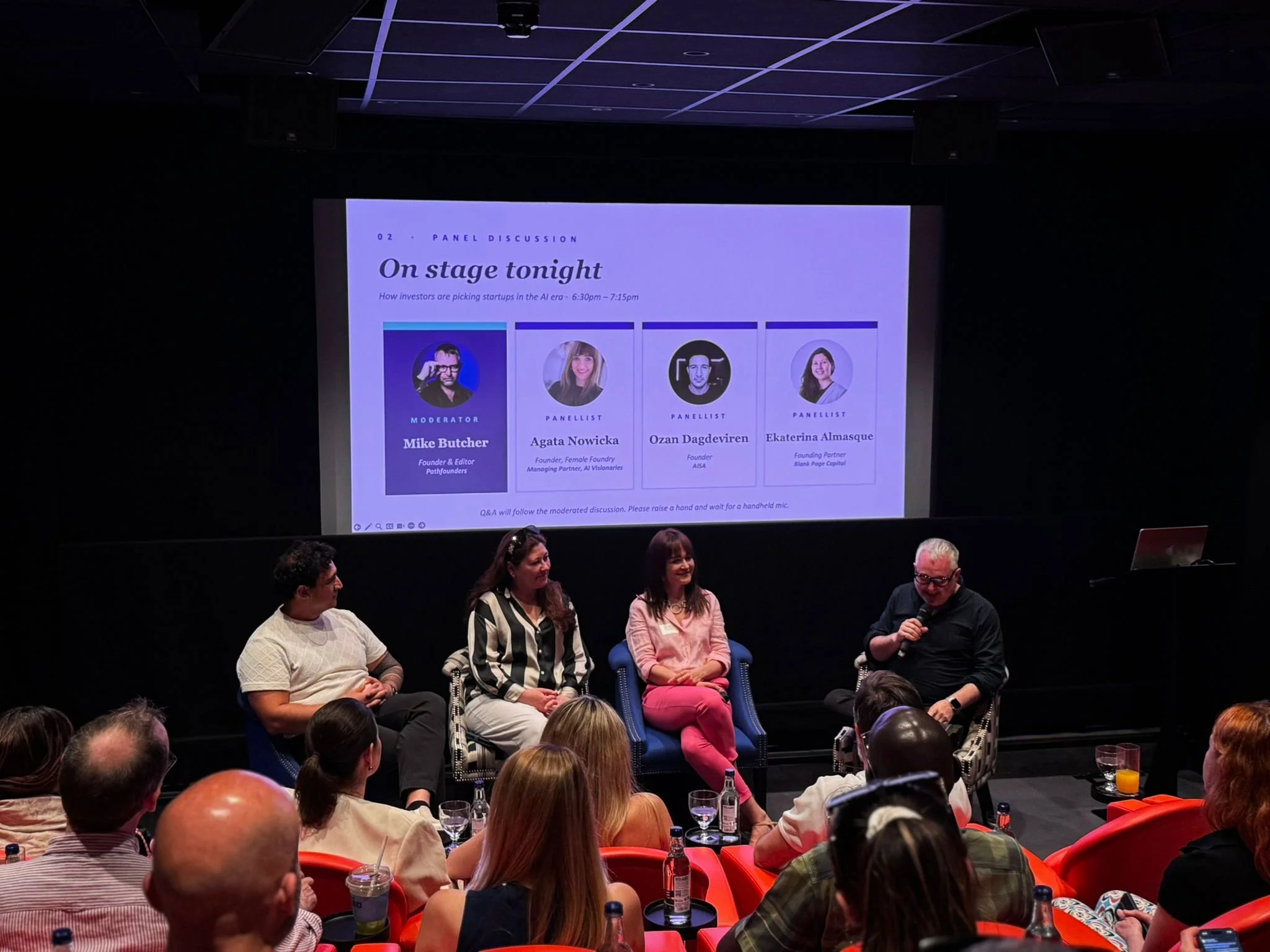
Event Panellists: Ozan Dagdeviren, founder of AI skills assessment startup Aisa.to; Agata Leliwa Nowicka, Managing Partner at Visionaries and founder of Female Foundry; and Ekaterina Almasque, Founding Partner of BlankPage Capital. On the far right is Mike Butcher, the moderator, and Founder and Editor of Pathfounders
Many technology pitch decks now start with AI. Founders often say their companies were built from scratch. Most demos look polished, and growth charts show positive trends. With so many people saying similar things, how can you tell who is really building something valuable?
This was the main question at a recent event in London, organised by YourStory PR and Pathfounders. A group of experienced investors and founders discussed what makes real AI-native companies stand out from the noise.
What does being "AI-native" mean in 2026?
The term "AI-native" company has changed over the years. It once meant any organisation that used AI tools, but now it refers to companies that can change their business dynamics through AI, from the unit economics of the product to workflows. These companies provide value that is only possible with AI at the centre of their operations.
What sets AI-native companies apart is how they are structured. From the beginning, they focus on using AI as a core part of their systems, rather than just improving existing processes. This approach affects how they organise their teams and how humans and machines make decisions together.
There are different types of AI companies. "Frontier builders" often come from academic backgrounds and focus on creating new ideas, such as advanced algorithms or energy-saving designs. Other companies may rely on existing models and tools. Each type has its advantages, but investors see them differently. It's important for founders to clearly state what type of AI company they are building to build trust and attract interest.
The founder profile is diversifying
One key theme of the evening was the changing idea of what makes a strong founder. Today, different kinds of companies need different types of leaders.
The most exciting profile these days is the domain expert. This person has spent 20 or more years in a specific field and can now build a business without requiring much upfront capital. Where once those people might have struggled to make a compelling case to investors, they are now among the most attractive founders in the market. They arrive with deep contextual knowledge, existing relationships and an understanding of the problem that cannot be shortcut. AI gives them the tools to build and go to market faster than was previously possible, so someone with 25 years of experience in legal services, insurance, or healthcare procurement can now turn that expertise into a product without first assembling a large technical team.
However, for companies tackling complex problems, the situation is different. Developing AI for drug discovery, protein folding, new materials, or semiconductor design cannot be done by just using a general AI model on a dataset. These projects need specialised foundational models, so the founding team must include people who understand both the science and machine learning. Investors are interested in startups where domain specialists and machine learning engineers work closely together. However, this collaboration is challenging because these groups typically do not work together and often view their own expertise as more important. Teams that successfully blend technology and human skills create something unique.
Another important type of founder is the T-shaped founder. This person is a generalist with one deep area of expertise and knows when to find partners for help. For example, a founder with skills in product management, systems thinking, and a background in human behaviour might not seem like a typical AI company leader. However, their combined skills can give them an edge in creating tools that engage people. The focus here is not on whether this type of founder is better, but on their self-awareness regarding their skills and their honesty about what they don’t know. This self-awareness is what investors value.
The common thread among these three profiles is that investors are no longer searching for a single ideal founder. Instead, they want leaders who understand the type of company they are building and are working to assemble the right team for that specific challenge.
What investors look for in founders
When discussing what makes an investor lean in, three key qualities emerged:
Crazy Ambition: This isn't the polished kind encountered in rehearsed pitches but the ambition that makes a founder dismissive of being told something is impossible. An investor backed a quantum computing company even when experts were uncertain about the technology's feasibility, because of the founders' refusal to accept failure as an option. They successfully sold hardware just a year and a half later.
Trustworthiness Under Complexity: There are times when a founder presents a technically complex solution that even expert investors struggle to grasp. In these moments, what matters is the credibility of the person delivering the information. An investor met the co-founders of a chip company in a coffee shop, where one of them sketched an architecture on a napkin. Although she didn't fully comprehend the drawing and even consulted experts who couldn't determine its viability, they decided to invest because they trusted that the founder would follow through on their commitments.
Passion, Distinct from Enthusiasm: Passion was defined as going beyond being excited about a market opportunity to a deep frustration about knowing something could be improved and feeling compelled to address it. This intrinsic drive fosters execution in a unique way that investors can sense. As one panellist noted, sometimes the specifics of what someone is saying may be unclear, but their intense commitment to their project shines through, prompting the desire to support them.
Curiosity and the ability to learn quickly were also recognised as important traits. The best founders in AI are those who think a few years ahead of the current state of technology and find that gap energising.
Defensibility is the hard question nobody has fully answered
The most challenging topic discussed was defensibility, and the panel openly acknowledged the uncertainty around it. Traditional answers like being faster, building a brand, and having network effects are not as reliable as they used to be. If a product can be copied within a week using the same tools that everyone has, it likely wasn’t defensible in the first place.
The idea that stood out was that true defensibility comes from having unique data and expertise in a specific field. When a company combines these two elements and uses AI to improve them with every interaction, that’s when a sustainable advantage starts to form.
The way a product learns over time is very important. If completing each task makes the model better, and every new customer adds to a unique data resource that others can't easily replicate, the gap between a company and its competitors grows over time.
The idea of a competitive edge is also useful. Not every advantage has to last forever. The key is whether a company can stay ahead in ways that are hard to copy for long enough to reach the next stage.
Are investors using AI to choose AI companies?
One panel expert has developed tools that use AI to support investment decisions. After testing these tools against successful past examples, the results were disappointing: the model often did not identify the winning companies. AI can explain what has worked in the past, but it cannot reliably predict future successes. This limitation isn’t easily fixed with better training data because investing is about beliefs about the future, not just finding patterns in the past.
However, AI can still play a role in the investment process. It is useful for tasks like gathering information, screening potential investments, and detecting early signs of success. But ultimately, a person must make the final decision about a founder. This involves meeting face-to-face, discussing ideas, and deciding if they believe in the project.
Where does this all lead?
The panel concluded with a discussion of what might come after the AI era, including the impact on political systems and how money moves, a future of abundance and better health, and the fear that power would concentrate in the hands of those who control the algorithms.
What connects these different views is a shared understanding that we are facing a crucial moment with uncertain outcomes. The founders who are best prepared for this time are those who recognise that uncertainty exists. They focus on building something strong and defendable now. They also believe that acting quickly while being honest about what they don’t know is a smarter approach than waiting for a clear vision of the future.